
Your healthy spine and fresh mind is always our priority!
Loud Snoring Isn’t Normal: Could It Be Sleep Apnea?
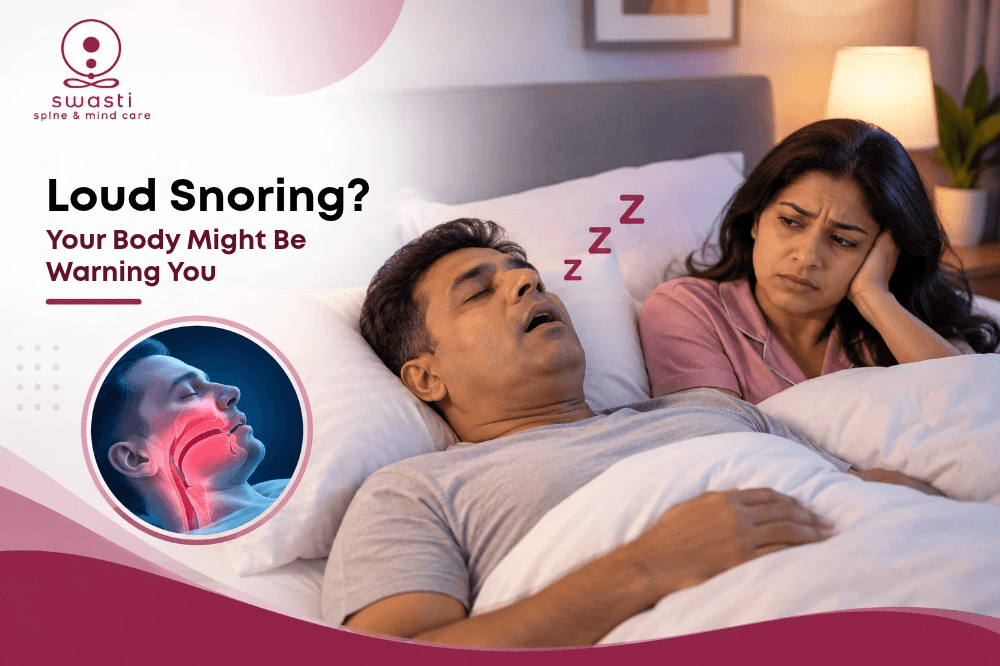
“Doctor, my husband says I stop breathing at night, but I feel completely fine by morning.”
Most of the doctors hear some version of this almost every week. Snoring gets treated as background noise, something a partner complains about and a person sleeps through without a second thought. But loud, frequent snoring is not always harmless. In some cases, it is the clearest external sign of sleep apnea, a condition that interrupts breathing during sleep and can quietly affect your health for years before it is ever diagnosed.
Not everyone who snores has sleep apnea. But when snoring is loud and persistent, especially alongside gasping, choking, or pauses in breathing, it is worth paying attention to rather than waiting it out.
What Is Sleep Apnea?
Sleep apnea is a condition in which breathing repeatedly stops or becomes significantly reduced during sleep. The most common form is obstructive sleep apnea (OSA), which happens when the muscles and tissues at the back of the throat relax too much and partially or fully block the airway.
These interruptions can happen dozens of times a night. The person usually does not wake up fully, but the brain registers each disruption and briefly pulls the body out of deep sleep to reopen the airway. Over time, this fragments sleep so thoroughly that someone can spend eight hours in bed and still wake up exhausted.
Is Loud Snoring Always a Sign of Sleep Apnea?
Loud snoring on its own does not mean you have sleep apnea. Plenty of people snore without any underlying breathing disorder. What changes the picture is a pattern of symptoms alongside the snoring. Signs worth watching for include:
- Very loud or persistent snoring
- Pauses in breathing noticed by a partner or family member
- Gasping, choking, or snorting sounds during sleep
- Waking up with a dry mouth or a headache
- Feeling tired despite what seems like enough sleep
- Excessive sleepiness during the day
- Trouble concentrating or remembering things
- Irritability or noticeable mood changes
- Frequent waking during the night
- Waking up feeling unrefreshed, day after day
One symptom deserves particular attention: if a partner or family member has actually observed you stop breathing while asleep, that is a strong reason to get evaluated rather than wait and watch.
Why Sleep Apnea Matters
Poor sleep quality rarely stays confined to nighttime. Left unaddressed, sleep apnea has been linked to high blood pressure, daytime fatigue, and difficulty concentrating, and the constant sleep disruption can spill over into work performance, relationships, and driving safety.
What surprises many patients is how often sleep apnea shows up wearing a psychological mask. Irritability, low motivation, poor concentration, and a sense of being emotionally overwhelmed can all stem from fragmented sleep rather than from stress alone. I have seen patients who were convinced they were simply “burnt out” or anxious, when the underlying driver turned out to be a sleep problem no one had asked about. This is part of why persistent mood changes deserve a proper look rather than being labelled as stress by default; our earlier piece on when it’s time to see a psychiatrist for anxiety walks through the same kind of pattern-based thinking.
Who Is More Likely to Develop Sleep Apnea?
Sleep apnea can affect anyone, but certain factors raise the risk, including:
- Being overweight or having obesity
- Increasing age
- A family history of sleep apnea
- A naturally narrow upper airway
- Enlarged tonsils or certain anatomical features
- Nasal obstruction
- Alcohol or sedative use, particularly close to bedtime
- Certain underlying medical conditions
It’s worth noting that sleep apnea can also occur in people who are not overweight, so a lean build shouldn’t rule it out if the symptoms are there.
How Is Sleep Apnea Diagnosed?
If your symptoms point toward sleep apnea, a doctor will usually recommend a sleep study. Depending on the situation, this can be done at a sleep centre or through a home sleep test. The study looks at breathing patterns, oxygen levels, heart rate, and other indicators while you sleep.
It’s important not to self-diagnose based on snoring alone. A proper medical evaluation can tell you whether your symptoms come from sleep apnea or from something else entirely, such as another sleep-related issue.
Can Sleep Apnea Be Treated?
Yes, and treatment is tailored to severity and underlying cause rather than one-size-fits-all. Depending on your evaluation, a doctor may recommend lifestyle changes, positional therapy, treatment for nasal obstruction, oral appliances, or CPAP (continuous positive airway pressure) therapy. In select cases, other medical or surgical options may be considered.
With the right treatment plan, most people see meaningful improvement in sleep quality and how they function during the day. If you’re looking into sleep apnea treatment in Ahmedabad, the first step is simply getting assessed so the plan can be built around your specific symptoms.
When Should You See a Doctor?
Consider speaking to a doctor if your snoring is:
- Loud and frequent
- Associated with choking or gasping
- Accompanied by breathing pauses that someone else has noticed
- Causing significant daytime tiredness
- Affecting your concentration or mood
- Paired with repeated waking during the night
If you regularly wake up exhausted despite what looks like a full night’s sleep, it’s worth finding out why rather than assuming it’s normal. At Swasti Spine & Mind Care, Dr. Sweta Parikh, one of the best psychiatrist doctors in Ahmedabad for sleep-related concerns, evaluates both the sleep pattern and any emotional symptoms that may have developed alongside it.
Frequently Asked Questions
Is Snoring Always a Sign of Sleep Apnea?
No. Many people snore without having sleep apnea. However, loud, persistent snoring accompanied by breathing pauses or daytime sleepiness should be evaluated.
Can Sleep Apnea Affect Mental Health?
Poor sleep can contribute to irritability, difficulty concentrating, low energy, and mood changes. Persistent sleep disruption can have a real impact on emotional wellbeing, which is why some patients end up first mentioning it to an anxiety doctor before the sleep connection is picked up.
Can Sleep Apnea Be Cured?
This depends on the individual cause and severity. Some people see substantial improvement with lifestyle changes, while others need ongoing treatment such as CPAP.
Should I See a Doctor For Loud Snoring?
If your snoring is persistent, very loud, or comes with gasping, choking, breathing pauses, or daytime fatigue, a medical evaluation is advisable.
Don’t Ignore Persistent Snoring
Snoring can feel like a minor inconvenience, something to joke about rather than investigate. But sometimes it’s the body’s way of flagging that normal breathing and sleep are being disrupted night after night. Recognising the signs of sleep apnea early can help you get the right treatment and get back to feeling rested.
If you or your partner has noticed loud snoring, breathing pauses, or unexplained daytime sleepiness, Swasti Spine & Mind Care can help you get evaluated and find the right path forward. Book a consultation today and take the first step toward better sleep.